The EKCO-project will examine how extended education in five countries operate. The aim is to develop new and improved practices in the field.

Extended Education Facilitating Key Competences through Cooperative Learning (EKCO) is an international research project involving researchers and after school program staff in five countries: Norway, Denmark, Sweden, Austria and Switzerland. The project runs from 2023 to 2026 and is funded with 4 million Norwegian kroner through research grants from Erasmus+.
The work is led by Gunn Helen Ofstad, Associate Professor at The Norwegian Reading Centre.

Practices


Developing quality in after school program offerings

EKCO aims to be a development project with the purpose of mapping current activities in after school programs (SFO) and enhancing their quality.
- After school programs, as an institution and field of study, vary greatly from country to country and have different levels of status. As a field of study, it is fragmented, and there is a need for research in this area as the offerings have become such an important part of children's development. Currently, there is little research, both nationally and internationally, in this field, despite it being a significant aspect of children's daily lives for several years," says project leader Gunn Helen Ofstad, Associate Professor at The Norwegian Reading Centre.
Mapping of similarities and differences
In the research project, a total of five countries will participate: Norway, Denmark, Sweden, Austria, and Switzerland. The activities between these five countries currently vary. In the first and ongoing phase of the project, researchers are examining the framework surrounding the activities and mapping out similarities and differences. Several of the countries have national regulatory documents associated with the offerings, but there is significant variation in what the after school program offerings aim to achieve for the children who use them.
Develop and make "best practices" available
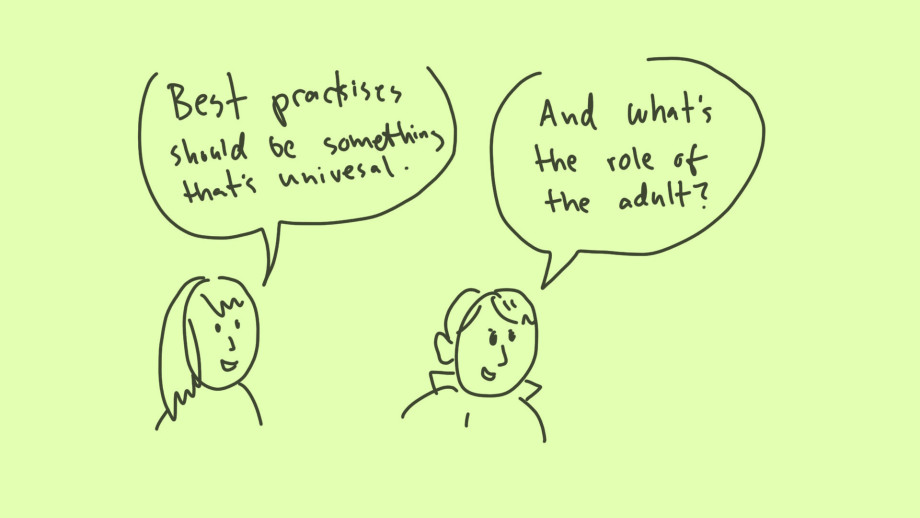
Best practices will be developed both locally and nationally, and participants will then test out the best practices defined by other countries. Additionally, a selection of core activities and themes related to sustainability will be chosen. These activities will be developed collaboratively by the research communities and after school program staff before being tested by the latter.
Following this, these activities will be made accessible to everyone. Literature from the five countries will also be translated into English to provide more people with access to literature and working methods.
The project runs from 2023 to 2026 and is supported by Erasmus+ with 4 million kroner.
Workshops


Reflections from Japan: Learning Across Cultures
In summer 2025, members of the EKCO project visited Japan to share research findings and learn from Japanese perspectives on school-age childcare and after-school care.

The visit combined academic exchange, school visits and first-hand experiences from Japanese educational settings.
The visit was connected to a presentation comparing everyday practices in after-school care in Japan, Norway and Denmark. Drawing on findings from the Erasmus+ funded EKCO project, the presentation focused on how meals and snack practices can support communication, participation, relationships and children's independence.
Learning from Practice

A central part of the visit was the opportunity to observe both public and private after-school care settings in Japan. Meeting children and staff provided valuable insights into everyday life, organisation and pedagogical practice.
Across the different settings, we encountered engaged children and professional staff who demonstrated strong attention to children's participation, well-being and involvement. The visits highlighted both similarities and differences between Japanese and Nordic approaches to school-age childcare.
One particularly valuable experience was seeing how children were encouraged to take responsibility in everyday activities while being supported by attentive adults. We observed learning environments where relationships, belonging and participation were clearly prioritised.
Shared Values Across Different Contexts

Although educational systems and daily routines differ across countries, the visit reinforced one of the key findings of the EKCO project: similar pedagogical values can be expressed in different ways.
Throughout the visit, we recognised a shared commitment to children's well-being, independence, participation and social relationships. At the same time, the Japanese settings demonstrated how these values are shaped by local traditions, organisational structures and cultural expectations.
These experiences reminded us that effective practice must always be understood within its specific context.
An Opportunity for Mutual Learning
The visit to Japan became an opportunity for dialogue, reflection and mutual learning. Discussions with researchers, practitioners and children provided new perspectives on how after-school care can support children's development and everyday lives.
The experience strengthened the international collaboration that lies at the heart of EKCO and highlighted the importance of learning from different educational cultures while recognising shared goals for children's well-being and participation.
Minister visits SFO
Minister of Education visits local school
Våland School recently welcomed Norway’s Minister of Education, Kari Nessa Nordtun, and gave her insight in how the school and its SFO systematically work with quality development.

Publications
Learning from the diversity of national structures, processes and intentions with regard to extended education
Bettina Krepper, Alexandra Efstathiades and James Loparics
Download the Observation Form Template
A blank observation form for documenting activities, participation, inclusion and learning processes.
Download a Completed Observation Form (Example)
A sample observation form illustrating coding, ratings and reflection notes.