Find information about our current research projects and research networks.
Greenhouse Games Lab
Verifying a Framework for the Commercialization of Research-Based Games

Greenhouse Games Lab seeks to advance the field of environmental humanities by demonstrating how environmental board games can benefit the accessibility of environmental knowledge beyond the research community. The long-term goal for the Greenhouse Games Lab is to establish a platform for supporting researchers in developing and publishing new environmental board games.
The project is led by Jacob Lee Tom of the University of Stavanger (Norway).
ROOTS
Recognising Other Ontologies of Treescapes (2026-2029)

Recognising Other Ontologies of TreeScapes (ROOTS) is an interdisciplinary humanities project that addresses the issue of forest heritage across the Nordic nations and seeks to build sustainable forest heritage futures.
Forests are vital elements of Nordic history and identity, and as the climate heats, these forests are under threat; responses tend towards addressing the threats to ecological and economic forest functions, with social and cultural benefit more difficult to categorise. This means forest heritage – particularly that which is less visible or suppressed – can be overlooked in new forest management strategies, with the deep connections to place that have built up slowly over time potentially being lost. ROOTS challenges this approach and foregrounds how Nordic forest heritage is a complex arrangement of histories, natural processes, place-based cultures, and entangled relations – both human and non-human.
The project is led by Charlotte Wrigley of the University of Stavanger (Norway). It is funded under NordForsk grant number 231501.
HEART
Human-Environment-Animal Relations in Deep Time (2025-2029)

Human-Environment-Animal Relations in Deep Time (HEART) examines human relations with animals over a long-time perspective. HEART has three parts. First, it will investigate how South African extinction histories can be narrated. Second, it will create digital representations of existing natural history specimens of animals that are now extinct. Third, it will engage the public with extinction histories by experimenting with digital repatriation of specimens.
HEART brings together specialists in environmental and animal history with scholars and practitioners in art, biology, and museum collections to pioneer new modes of environmental storytelling. The project is collaborative with partners in Norway and South Africa, building on prior research on how extinction is exhibited, on South African human-animal histories , and on the relationship between cultural heritage and history narratives.
The project is jointly led by Dolly Jørgensen of University of Stavanger (Norway) and Sandra Swart of Stellenbosch University (South Africa). The project also includes collaboration with research partners from University of Fort Hare (South Africa) and partners Stavanger Art Museum (Norway), Swedish Museum of Natural History (Sweden), Quagga Project (South Africa), and Robertson Museum (South Africa). It is funded by the Research Council of Norway and the National Research Council of South Africa.
Energy Lives!
Energy Lives! Infrastructural Citizenship in Nordic Energy Transitions (2024-2028)
Energy Lives! Infrastructural Citizenship in Nordic Energy Transitions scrutinizes the conjoined lives of energy and people in the Nordic countries over the past 150 years. The project centers citizens simultaneously as historical actors whose choices continue to form the present and as contemporary actors who live within energy infrastructures shaped by the past. Energy Lives! will generate new knowledge on how democratic engagement and citizen involvement in energy transition processes have impacted the legitimacy and efficiency of such processes. Perspectives as these are critically needed in contemporary political debates and strategies about environmentally and inter- and intra-generationally just green transitions.
The project is led by Melina Antonia Buns; project partners are Chalmers University of Technology and Aarhus University. The project is funded through NordForsk’s Green Transition call (project no 181638).
BLOCYP
Between London, Cyprus, and Palestine: Waste History in the British Eastern Mediterranean(2024-2026)
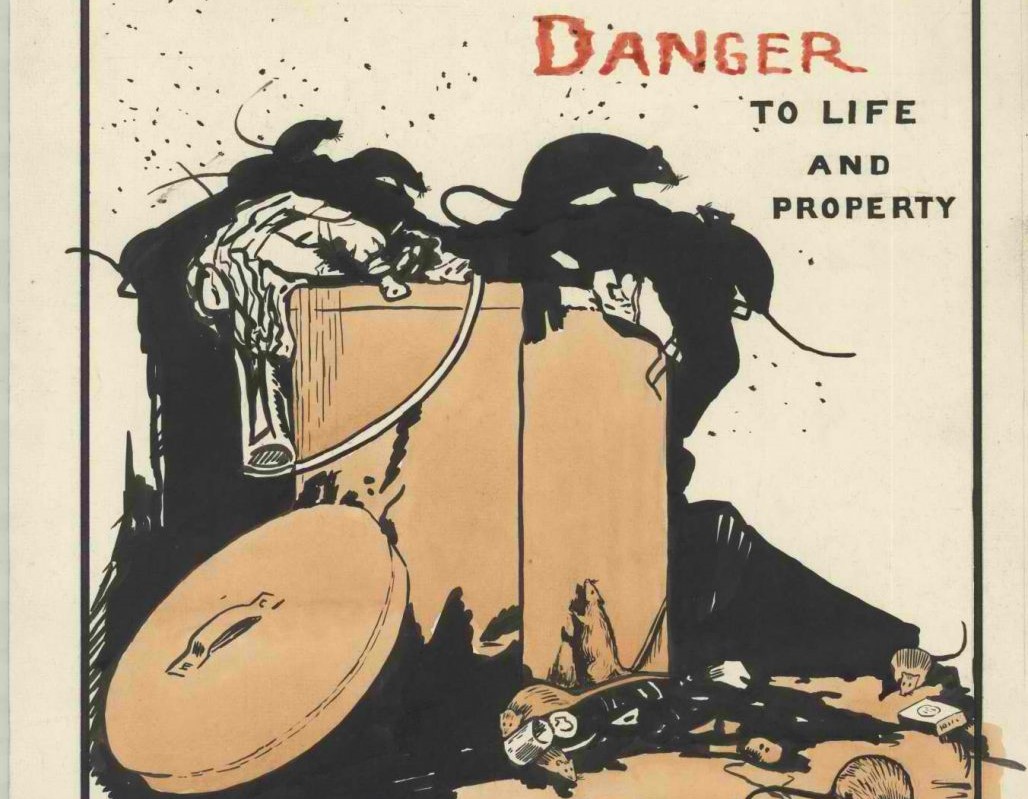
Between London, Cyprus, and Palestine (BLOCYP) aims to uncover the origins of waste treatment policies in two Eastern Mediterranean territories under British rule. BLOCYP uses Colonial Cyprus and the British Mandate of Palestine as case studies for examining sanitary challenges faced by Mediterranean cities during their rapid urbanization between the 1920s and 1940s. The project investigates five central cities: Nicosia and Famagusta (Cyprus), Jerusalem, Tel Aviv, and Jaffa (Israel/Palestine), allowing for various comparisons between countries, capital cities, and port cities. BLOCYP tackles three key issues: British sanitary policy regarding urban waste treatment, adaptation of sanitary solutions to local conditions and needs, and the role of British networks in spreading sanitary ideology and knowledge. The research facilitates a deeper understanding of British colonial sanitary perceptions and their local applications. Thus, it is a valuable case study for territories worldwide that underwent British rule. Additionally, it examines if the type of territory – permanent colony or temporary mandate – influenced British sanitation policy. BLOCYP aims to shed light on the roots of modern waste pollution and explore the migration of sanitary knowledge between Europe and the Mediterranean. After all, just as our approach toward waste reflects our way of living and values, it was the same a century ago.
The project is funded by the EU Horizon MSCA PF 2024 program and is led by Yaron Jorgen Balslev.
PITCH
Petroculture’s Intersections with The Cultural Heritage sector in the context of green transitions (2023-2027)

PITCH brings together academic and cultural sector organisation partners in six countries to spur on the processes by which humanities and arts scholarship and public interventions can strengthen citizen engagement with the constantly changing nature of cultural heritage and its relationship to past and present petrocultures to lay the groundwork for rapid, society-wide European green transitions away from a reliance on fossil-fuels.
Dolly Jørgensen is the lead on the PITCH-project, which is funded by the EU Horizon Europe program and UK Research & Innovation.
Good Fire
An Environmental History of Prescribed Burning in Norway and the North (2023-2027)
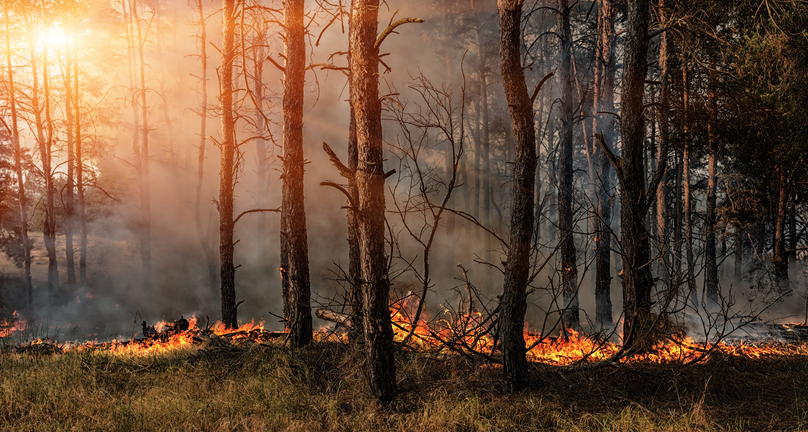
The Good Fire Project examines the history of prescribed fire in Norway and the boreal north.
The project asks whether fire suppression accurately characterizes twentieth-century landscape management practices and traces the roots of modern mega-fires to a complex collection of landscape management practices extending well beyond wildfire prevention policy.
Good Fire examines the history of prescribed burning in the Norway and the boreal north, including Scandinavia and northern Canada. Using historic climate and wildfire data, archival evidence, imagery, and popular accounts, this project will assemble a history of human interaction with fire over time. Although climate change has exacerbated wildfires, Norway and other boreal states arguably have an accumulated fire history that can inform the present. Good Fire frames fire as part of a long and dynamic relationship with combustion which has changed over time in response to social, political, and economic forces.
The project is led by Charlotte Wrigley and is funded by the Research Council of Norway's FRIHUMSAM programme.
Nation of Mechanics
Animality and Indigeneity in American Automotive Culture (2023-2025)
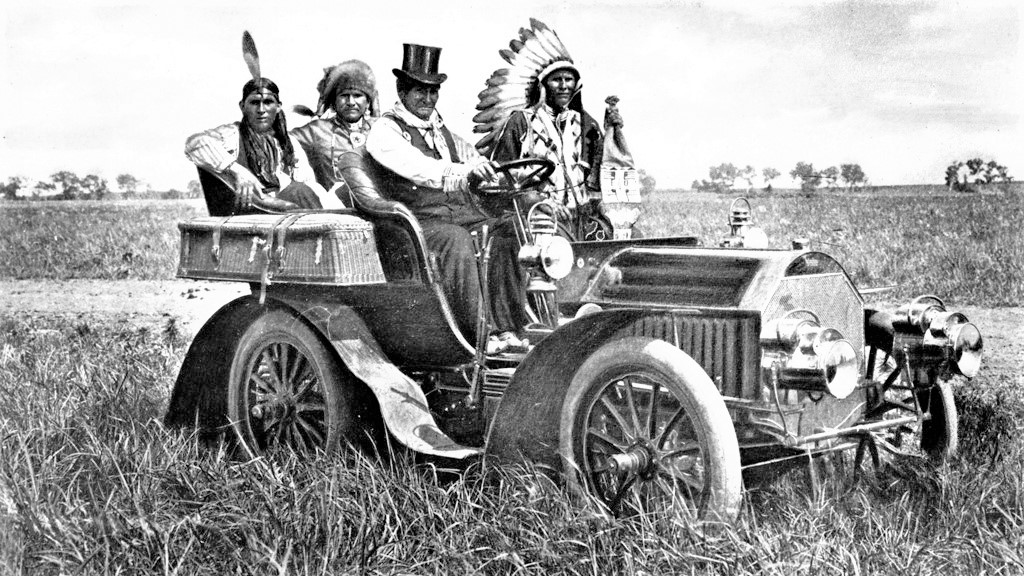
Nation of Mechanics examines fiction by Indigenous American authors of the late twentieth century for literary representations of animals, automobiles, and the natural environment.
Nation of Mechanichs (NOMECH) develops a novel approach to reading the road journey in American fiction (a genre which has historically excluded Indigenous writers) by centring Indigenous stories in which the environment is frequently presented as a character in and of itself, in contrast to the colonial tendency to personify the cars and ignore the living nonhuman world under the wheels.
Combining approaches from literary studies and the environmental humanities, NOMECH explores the extent to which Indigenous American authors present counter-narratives to the colonial story of automobility in which human contact with the natural environment is defined by driving over it: moving from a relationship based on dominance, conquest, and subjugation to one which places more emphasis on mutually beneficial ways of living with other animals and technology.
The project is funded by the EU Horizon MSCA PF 2022 programme and is led by Posdoctoral Fellow Daniel Bowman.
Research Networks


The Greenhouse publications with UiS Scholarly Publishing Services
The Greenhouse has a growing series of publications that are available online via UiS Scholarly Publishing Services.
Find a couple of examples from this page.

